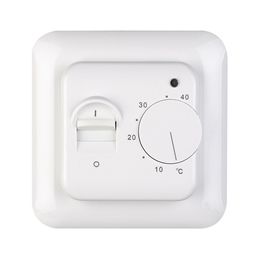
A thermostat is a device that senses the current temperature and then manipulates a heating and cooling system based on that temperature's relationship to a set point. The set point is the optimal temperature as defined by the user. In residential and commercial scenarios, the two main classifications of thermostats are programmable and non-programmable. Programmable thermostats can adjust the set point automatically, and non-programmable thermostats require a manual adjustment in order for the set point to change.
About Non-Programmable Thermostats Even in the Internet age, basic, non-programmable thermostats remain the most common type of thermostat in residential scenarios. The reason for this is that usability is the most important factor in these scenarios.

In a home, a thermostat must be effective, efficient and simple enough for a child to use. The iconic round thermostat meets those needs, which is why it is still in use more than a century after its invention, despite innovations such as and computerized control. Selecting a Non-Programmable Thermostat The process of selecting the right non-programmable thermostat is definable in a series of simple steps: After deciding on a non-programmable model, the first step is to identify the components of the heating and cooling system. With that information, it's possible to determine the thermostat application and the necessary stages. Download Kabir Ke Dohe By Jagjit Singh on this page. Next, research brands for reputation and suitability. Choose a user interface style, and select any features of convenience.
The simple choice for energy efficiency. Every programmable thermostat comes with four pre-programmed settings and maintains those settings within two. Shop our selection of Non-Programmable Thermostats in the Heating, Venting & Cooling Department at The Home Depot. Non-Programmable Thermostat Buying Guide. In small homes and households with simple schedules, programmable thermostats are overkill that cost a lot and provide.